


When observers in the West look at China today, they often see contradictions. A country that still calls itself socialist, ruled by the Communist Party, yet one of the world’s largest champions of market-driven growth.
A state with limited political freedoms, but where hundreds of millions have moved from poverty into middle-class prosperity in just a few decades. To understand modern China, it is necessary to grasp a central point: in Chinese society, stability and safety are often valued above freedom. This fundamental concept explains both the country’s economic success and the continuing gap in understanding between China and the West.
From Communism to “Capitalism with Chinese Characteristics”
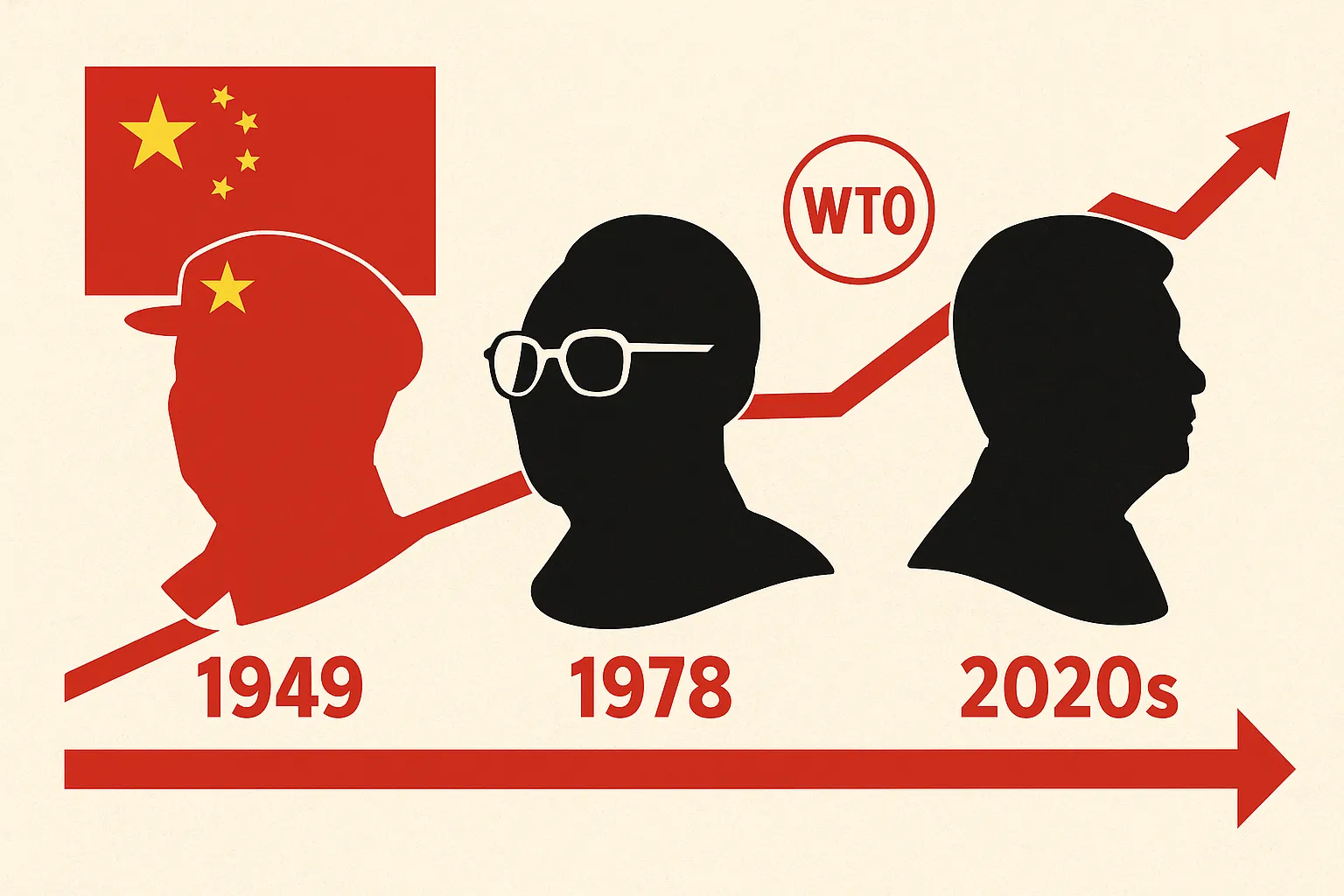
When the People’s Republic of China was founded in 1949, it followed the classical communist model: central planning, collectivized agriculture, and near-total state control over production. The results, however, were often disastrous, producing inefficiency, food shortages, and stunted growth.
The turning point came in 1978 under Deng Xiaoping, who famously declared: “It doesn’t matter whether a cat is black or white, as long as it catches mice.” This pragmatic approach opened the door for what the Party called “Socialism with Chinese characteristics.” In practice, this meant injecting capitalist tools into a socialist framework:
- State-owned enterprises remained dominant, but private businesses were allowed to emerge and grow.
- Foreign investment was encouraged through Special Economic Zones (SEZs) such as Shenzhen.
- Agricultural collectivization was abandoned in favor of the household responsibility system, boosting food production.
This hybrid model allowed China to retain political control and centralized authority, while unleashing the dynamism of markets. It was not a wholesale embrace of Western capitalism, but rather a controlled adaptation designed to serve national development goals.
Development Through Stability
For many in the West, political freedom is the cornerstone of prosperity. Freedom of speech, elections, and liberal democracy are considered inseparable from progress. But in China, the underlying assumption is different: stability comes first.
China’s long history is marked by cycles of unity and chaos. Periods of prosperity—like the Tang and Qing dynasties—were tied to strong centralized rule, while disunity often brought famine, war, and suffering. This historical memory has shaped a national consciousness where order and continuity are valued above individual liberties.
To the Chinese mindset, freedom without stability is meaningless. What good is the right to vote, they argue, if society is fractured, unsafe, or unable to provide opportunities? By maintaining strict control over political life, the Communist Party presents itself as the guarantor of order, national unity, and steady progress.
This is not to say Chinese citizens are passive. They push for better lives, better wages, and better education. But rather than seeking political revolution, their demands are usually directed toward economic advancement and personal security.
The Rise of the Middle Class
Perhaps the most striking outcome of China’s unique model is the rise of its middle class. In 1980, China was one of the poorest countries on Earth, with the vast majority living in rural poverty. Four decades later, it has become the world’s second-largest economy, and more than 400 million Chinese are now considered middle class.
The symbols of this transformation are visible everywhere:
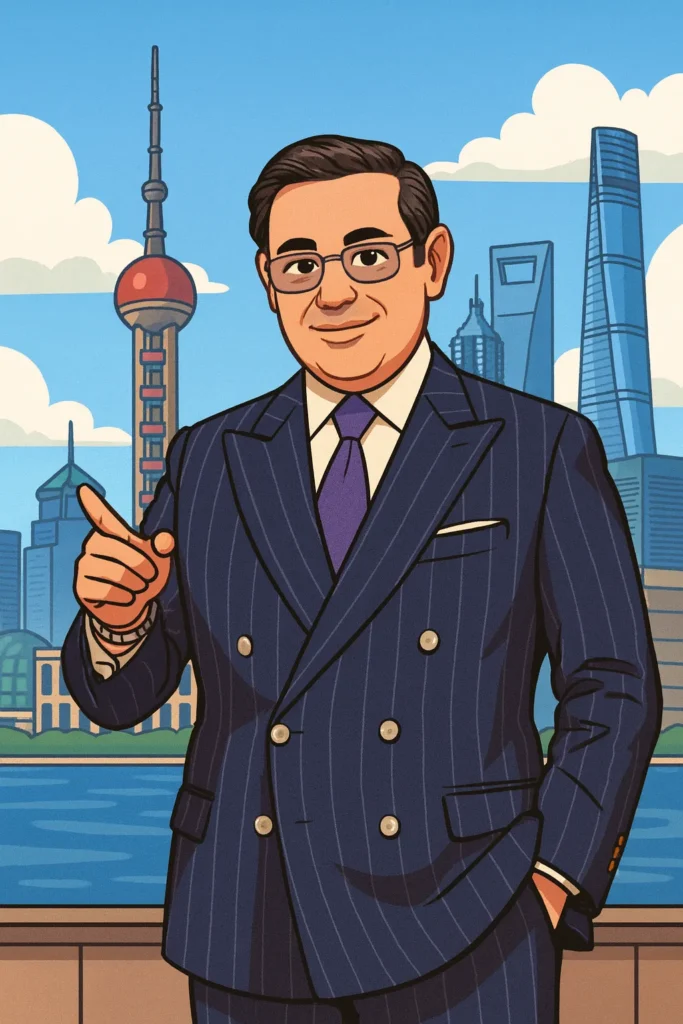
- Skyscrapers in Shanghai and Shenzhen rival those of New York.
- Chinese tourists fill shopping streets in Paris and Milan.
- Domestic consumption—from cars to luxury goods—has exploded.
For the Chinese people, this rapid improvement in living standards is the clearest validation of their system. The Party may restrict speech or censor dissent, but in return, it has delivered jobs, housing, education, and healthcare at a scale unmatched in history. To the average citizen, this trade-off feels not only acceptable but preferable: prosperity and safety outweigh abstract notions of political freedom.
The Western Misunderstanding
Many in the West continue to struggle with this concept. From a Western liberal perspective, a society without free elections and open press must inevitably stagnate or collapse. Yet China’s trajectory has challenged that assumption.
The Western world often underestimates the collectivist culture in China. Whereas Western societies tend to emphasize individual rights, China’s social fabric prioritizes family, community, and national progress. In this context, restrictions on speech or political competition are less central than the ability to ensure order, security, and rising prosperity for the majority.
This does not mean Chinese citizens do not care about rights. But their hierarchy of values places stability at the foundation. The Western focus on freedom as the highest good overlooks this cultural difference, leading to persistent misinterpretations of China’s resilience and popularity of its model domestically.
Conclusion: A Different Path to Modernity
China’s transformation from communism to “capitalism for everyone” has reshaped the world. It is not capitalism in the Western sense, where markets operate with minimal state interference. Nor is it traditional communism, with its rigid central planning. It is a hybrid system, designed to prioritize stability and security, while using capitalist mechanisms to generate wealth.
The result is a new social contract: the Communist Party provides prosperity, safety, and order, while the people accept limits on political freedoms. For hundreds of millions lifted into the middle class, this trade has proven worthwhile.
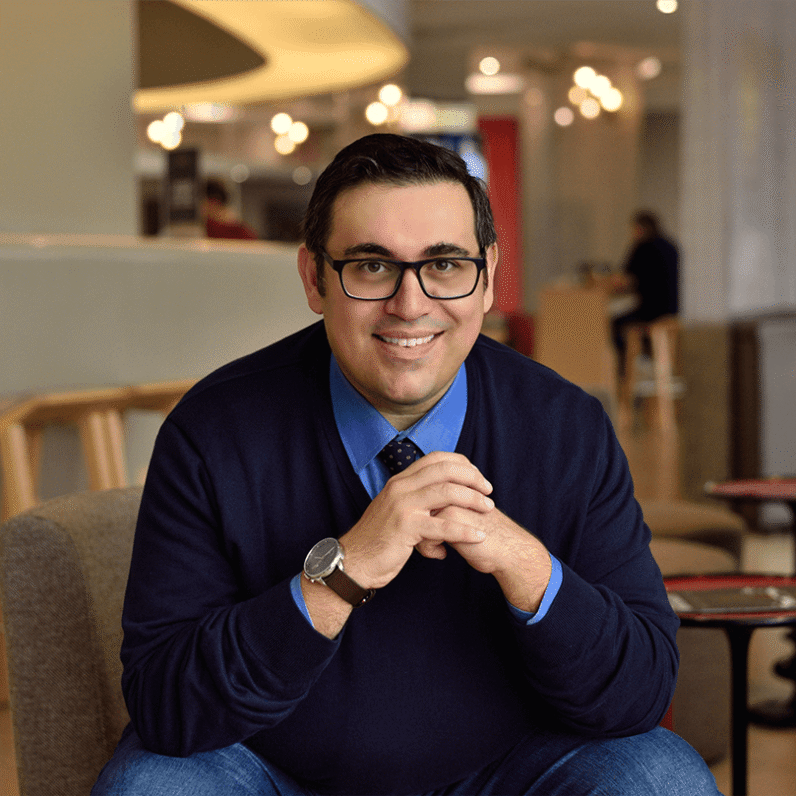
He uses to dedicate part of his life to inspire others and help them achieve the most out of their lives. Since he was 20, he had successfully founded and managed several companies operating in the field of management consulting, wealth management and fintech. He is Member of Institute of Directors in London, Member of Changer Club in Riga, Member of Fintech Association of Hong Kong, Member of Singapore Fintech Association, Member of Non Executive Director Association in London and Member of Alumni Network of Draper University in San Francisco. He loves travelling, he is a cigars lover, an amateur golfer and a dapper man.
DO YOU NEED MY TEAM HELP?
Please write me an email with your specific case, my team will be more than happy to help you to find the best solution for your business need or to advice and support you to start a new business venture.
Contact me
DO YOU WANT TO JUMP INTO A ONE-ON-ONE CALL WITH ME?
Take your chance to learn from who have done most of the stuff he is talking about for himself and he knows what works – and what doesn’t – in the real world.

Book a Wake Up Call with me, if you are moving the first steps in the business world and you wish to learn how to get started!
Wake up callBook a Check Up Call with me, if you are already in business and you wish to check up your business and leverage my experience to improve your structure or expand your business.
Check up call
